

Most first-time landlords in Denver make the same three mistakes: they skip the city license, they use a lease they found online, and they rent to someone they had a bad feeling about because the unit sat empty for three weeks. All three are fixable. None of them are cheap to fix after the fact.
This guide covers what you actually need to do before you hand over keys - licensing, insurance, lease, screening, move-in documentation, and maintenance obligations. In that order. Get through all of it and you'll be ahead of most landlords who've been doing this for years.
The Mindset Shift Nobody Talks About
Before the checklist, one thing: you're running a business now.
That sounds obvious but it doesn't feel obvious the first time a tenant calls at 9 PM about a leaking faucet in a house where you used to live. The emotional connection to the property is real and it works against you. It makes you take maintenance complaints personally. It makes you over-invest in cosmetic upgrades tenants don't care about. And it makes you hesitate on tenant decisions that should be purely financial.
The property is an asset. Treat it like one. The tenant is your customer, not your friend and not your adversary. They're running a life in your investment. Your job is to maintain the asset, keep them reasonably happy, and make sure your returns hold.
Get the personal stuff out of the way before you list. After that, it's just business.
Step 1 - Get Your Denver Rental License
Denver requires a residential rental property license for every rental unit in the city. This isn't a guideline or a suggestion. It's the law, it applies to single-family homes as well as apartments, and operating without one puts you out of compliance from day one.
The process: You apply through Denver's Department of Excise and Licenses, pay the fee (around $25-$100 depending on property type), and schedule a property inspection. The inspection covers basic safety items: working smoke and carbon monoxide detectors, accessible egress windows in bedrooms, functional heating systems, and no major code violations.
If you bought a Denver rental and plan to list it immediately, start the license application first. The inspection can take a few weeks to schedule and you can't legally rent until it's complete.
Denver requires a rental property license for every unit in the city. It's not optional and it's not new. If you're renting without one, you're operating illegally and your insurance coverage may be voided in a claim.
Licenses renew every four years and require a new inspection at renewal. Keep a copy of your license number - your lease should reference it.
New to Denver's requirements and not sure you want to manage compliance on your own? That's what property managers are for. Sheepdog handles licensing, inspections, and every compliance item that trips up first-timers.
Step 2 - Get the Right Insurance
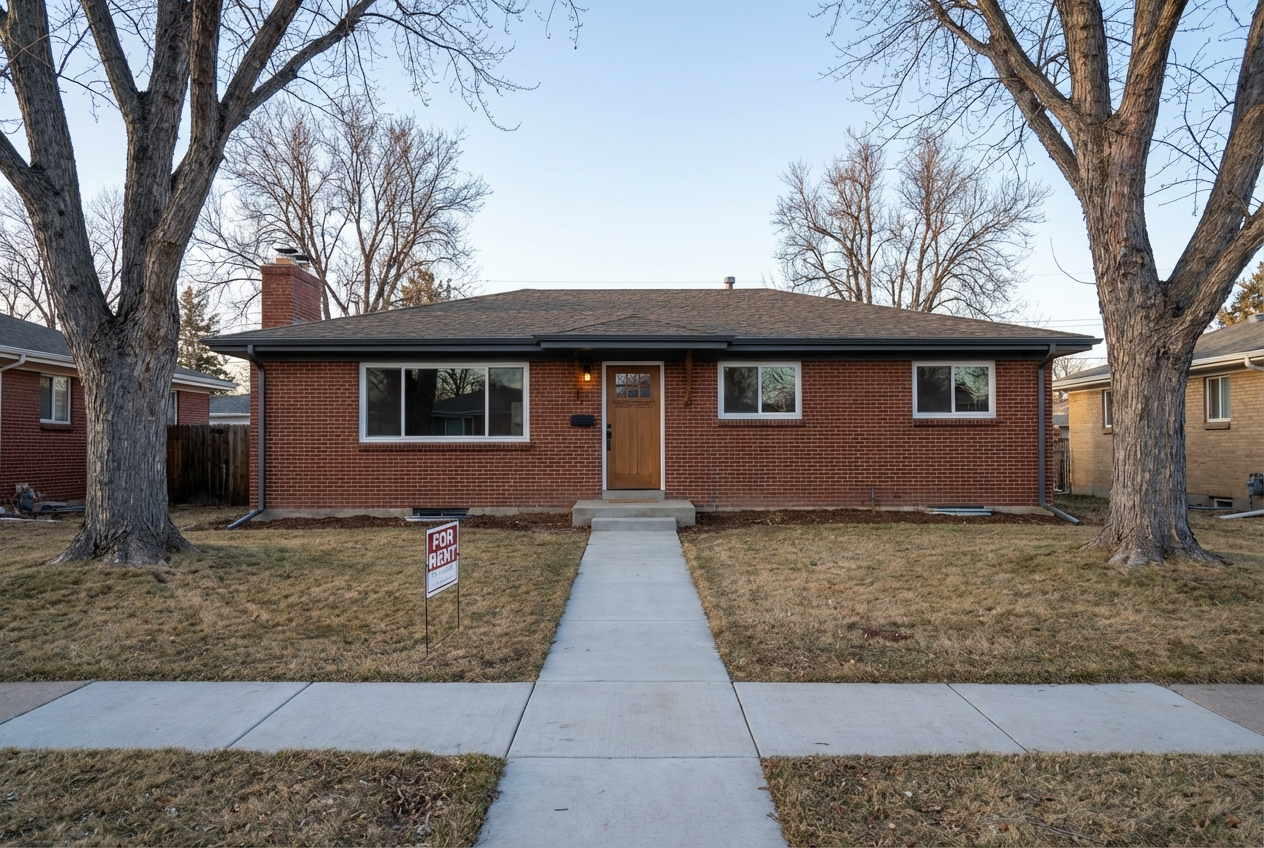
The homeowner's policy on your property almost certainly excludes rental activity. Read the exclusions. Most standard homeowner's policies define a "dwelling" as owner-occupied and explicitly exclude coverage when the home is rented to others. One tenant injury claim while you're on the wrong policy and you're paying out of pocket.
You need a landlord policy, sometimes called a dwelling fire policy. It covers the structure, loss of rental income if the property becomes uninhabitable due to a covered event, and liability if a tenant or guest is injured on the property.
Cost varies but expect roughly 15-25% more than a standard homeowner's policy for equivalent coverage. That's not an argument against it - it's the cost of being properly insured.
Require renter's insurance from your tenant. Your landlord policy doesn't cover their stuff, and if their belongings are damaged (by a burst pipe, for example), they'll come looking to you. A renter's insurance requirement in the lease shifts that liability where it belongs and typically runs tenants $12-20/month.
Step 3 - Use a Colorado-Compliant Lease
This is where most first-timers take the cheap route and pay for it later. A lease from a legal website, written for a different state, using 2019 law - that's the kind of thing that gets thrown out of court at an eviction hearing.
Colorado's landlord-tenant law has changed significantly in recent years. Any lease used for a new or renewed tenancy in 2026 must comply with updated Colorado requirements including fee disclosure rules, security deposit limits and handling procedures, tenant screening notice requirements, and habitability language. A generic template won't cover all of these correctly.
Use an attorney-maintained lease specific to Colorado. If you hire a property manager, their lease is the easiest solution. At Sheepdog, we use a lease built and kept current by Denver's largest landlord attorney, and it's updated every time the law changes. That's not something you get from a $29 lease template.
The worst case scenario with a bad lease isn't an administrative hassle - it's an eviction that fails because your lease is unenforceable, meaning a non-paying tenant stays in your property for months while you try to refile.
Step 4 - Screen Tenants Like You Mean It
Tenant selection is the most important decision you make as a landlord. A great tenant in a mediocre property outperforms a bad tenant in a great property every single time.
Fair Housing is federal law. You cannot screen based on race, color, national origin, religion, sex, familial status, or disability. Colorado adds source of income and sexual orientation as protected classes. Know the rules before you advertise.
Within those rules, you can and should have clear, written screening criteria. Apply them consistently to every applicant.
What actually matters in tenant screening:
Income should be at least 2.5-3x the monthly rent, verified via pay stubs or tax returns. Rental history matters more than credit score - a tenant who paid rent on time for five years with a 620 credit score is usually a better bet than someone with a 750 score and a history of moving every eight months.
Colorado's income-to-rent ratio math is simple: a $1,900/month unit ideally requires a tenant making at least $4,750-$5,700/month gross. In practice, Denver's rental market means you'll sometimes need to flex this slightly, but don't flex on rental history.
The tenant who paid ahead and brought cookies during the showing is sometimes the same one who tears up the kitchen at month six. Income documentation, rental references, and eviction history are the data points. Your gut is not a data point.
Tenant screening is one of the highest-leverage services a property manager provides. At Sheepdog, we run full background checks, verify income, contact prior landlords, and apply consistent criteria to every applicant. Talk to us if you want to understand what that process looks like.
Step 5 - Document Everything at Move-In
Move-in documentation is what separates landlords who win security deposit disputes from landlords who lose them. This is the moment you establish the baseline condition of the property.
Your move-in packet should include:
- A written condition report documenting every room and every item
- Photographs dated at move-in, covering every wall, every floor surface, all appliances, and any pre-existing damage
- Both parties' signatures on the condition report
- A copy of the lease and all addenda signed by all tenants
Colorado security deposit law is direct: return the deposit within 60 days of move-out (or 72 hours if the tenant abandons the property) or owe the tenant three times the amount withheld plus attorney fees. Most first-timers discover this law right as they're disputing $500 in cleaning costs. Don't be most first-timers.
The 60-day clock starts at move-out. It doesn't pause for disputes. If you're going to make deductions, document them, provide an itemized statement, and send the balance with receipts within 60 days. No exceptions.
Step 6 - Know Your Maintenance Obligations
Colorado's warranty of habitability law (significantly expanded under SB24-094) requires landlords to maintain rental properties in a habitable condition and to respond to habitability issues within specific timeframes.
Once you receive written notice of an uninhabitable condition, you must begin remediation within 24-96 hours depending on severity, and continue until the issue is resolved. Certain conditions (no heat in winter, active plumbing failure, gas leak) require immediate response. Others give you a 7-day window before a legal presumption of failure kicks in.
This is not a law that rewards slow responses. Document every maintenance request and your response to it.
The home warranty trap: Home warranties sound like smart protection for a new landlord. They're not. Home warranty companies use their own vendors, on their own timelines, for problems they sometimes decline to cover. In the meantime, your tenant is waiting for heat and Colorado law is ticking. We won't manage a property with a home warranty active for exactly this reason. Cancel it before you list.
Build a list of vetted vendors: a plumber, an HVAC technician, an electrician, a general handyman. Know who you're calling before the 10 PM call comes in. Because it will come in.
Frequently Asked Questions
Do I need a license to rent out my home in Denver?
Yes. Denver requires a residential rental property license for every rental unit in the city, including single-family homes. You apply through Denver's Department of Excise and Licenses, pay a fee, and pass a property inspection. Operating without a license is illegal and may void your insurance coverage.
What insurance do I need as a Denver landlord?
You need a landlord insurance policy (often called a dwelling fire policy), not a standard homeowner's policy. Standard homeowner's policies typically exclude rental activity. Your landlord policy should cover the structure, loss of rental income, and liability. Require your tenant to carry renter's insurance for their personal belongings.
Can I write my own lease in Colorado?
Technically yes, but it's a bad idea. Colorado's landlord-tenant law changes frequently, and a non-compliant lease can be unenforceable in court. Use an attorney-maintained Colorado-specific lease or hire a property manager who provides one. A failed eviction due to a bad lease is far more expensive than proper legal documents up front.
What can I legally consider when screening tenants?
You can screen on income (typically 2.5-3x monthly rent), rental history, credit, background, and eviction history. You cannot screen based on race, color, national origin, religion, sex, familial status, disability, sexual orientation, or source of income. Apply your criteria consistently to every applicant and put your screening criteria in writing.
How long do I have to return a security deposit in Colorado?
60 days from the date of move-out, or 72 hours if the tenant abandons the property. If you fail to return the deposit or provide an itemized statement within 60 days, you may owe the tenant three times the withheld amount plus attorney fees.
What are Colorado's habitability requirements for landlords?
Colorado requires landlords to maintain rental properties in a habitable condition - functioning heat, plumbing, electrical systems, weatherproofing, and no mold or gas hazards. Under SB24-094, landlords must begin addressing reported issues within specific timeframes or face a legal presumption of failure to comply.
What is the home warranty trap for landlords?
Home warranties route repairs through their own vendors and timelines, which often conflict with Colorado's mandatory habitability response windows. If a tenant reports a heating failure and the home warranty company can't get a vendor out for five days, you're in violation of Colorado law. The warranty company's delays become your legal problem.
Should a first-time landlord hire a property manager?
Hiring a property manager doesn't mean you're giving up control - it means you're delegating operations to someone who does this every day. For first-time landlords in Denver, the licensing requirements, tenant screening legal framework, Colorado-specific lease requirements, and maintenance obligations all carry real risk if mishandled. Whether you hire a manager or not, understand the requirements before you list.
Renting a property in Denver is a legitimate path to strong returns. It's also a genuine business with real legal obligations, and the learning curve catches a lot of first-timers. The ones who do well are the ones who set things up correctly before the first tenant ever signs.
If you'd rather hand the operations to professionals who've done this a few hundred times - we're happy to talk.