
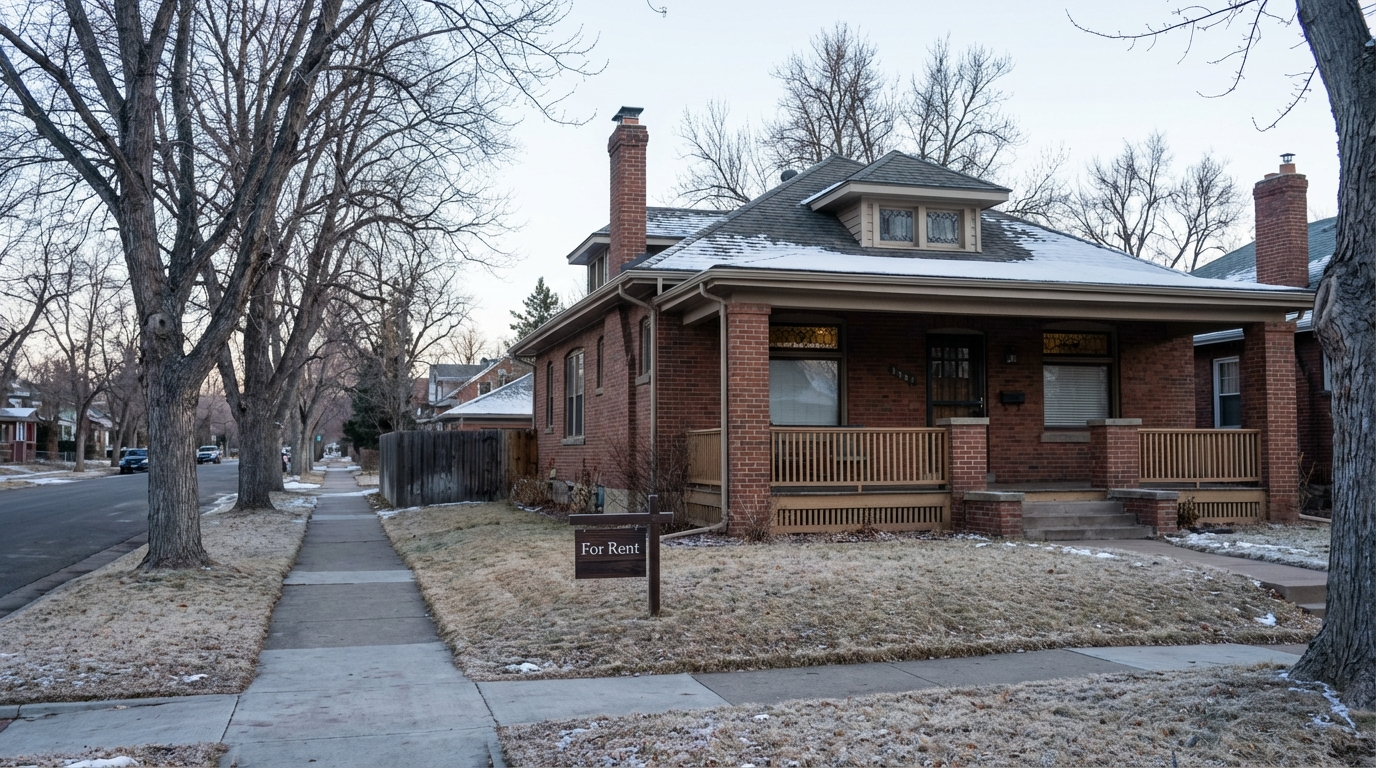
The Denver rental market in 2026 isn't the landlord's gold rush it was in 2021, and owners who haven't updated their expectations are sitting on vacant units right now. The market has shifted to something closer to balanced. Average rents are down about 2.7%, vacancy is hovering around 7% metro-wide, and the apartment supply that flooded in during 2024 hasn't fully absorbed yet. If you're operating the same way you were three years ago, that's worth examining.
The good news is that "balanced" doesn't mean "broken." Single-family home rentals are in a noticeably different position than apartment buildings. Suburban submarkets are holding tighter than the city core. And the supply pipeline is slowing, which means the second half of 2026 should look better than the first. This post covers the actual numbers, what's driving them, and what Denver landlords should be doing differently right now.
The Real Numbers
Denver's average rent across all property types came in around $1,889/month heading into 2026, down roughly 2.7% from the prior year. That's a real decline, not a rounding error.
Metro-wide vacancy is sitting at approximately 7%, the highest it's been in about 15 years. The city of Denver proper is even tighter at 7.7%. For context: a "balanced" rental market is typically defined as 5-6% vacancy. We're above that.
The number that matters most is days on market. A unit that fills in 10 days versus 30 days at $1,900/month represents about $1,300 in lost rent. That loss doesn't show up on your annual rent statement, but it absolutely shows up in your actual returns.
The important distinction here is what's driving that vacancy number. It's not uniform.
Apartments and Single-Family Homes Are in Different Markets
About 20,000 new apartment units hit the Denver market in 2024. That's a lot. Most of those are multi-family, concentrated in growth corridors and urban neighborhoods. The oversupply is real, particularly in luxury and newer mid-rise product. Downtown Denver, RiNo, and the surrounding urban core have seen concessions that didn't exist two years ago - free first month, reduced deposits, that sort of thing.
Single-family home rentals are a different story. The SFH market has softened, yes - rents are down over $140/month year-over-year in that segment. But vacancy in single-family is structurally much lower than multi-family, because there simply isn't as much of it. Most single-family rentals are owned by individual investors, not institutional operators pumping units to market.
A single-family home in Stapleton or Sloan's Lake is not competing with the same market as a new luxury apartment tower in RiNo. Treating them the same way will cost you.
If you own a well-maintained SFH in a good neighborhood with good schools, you're in a better position than the overall numbers suggest. If you own units in a newer apartment building in a high-supply corridor, you're feeling the full weight of the correction.
The Suburbs Are Holding Up
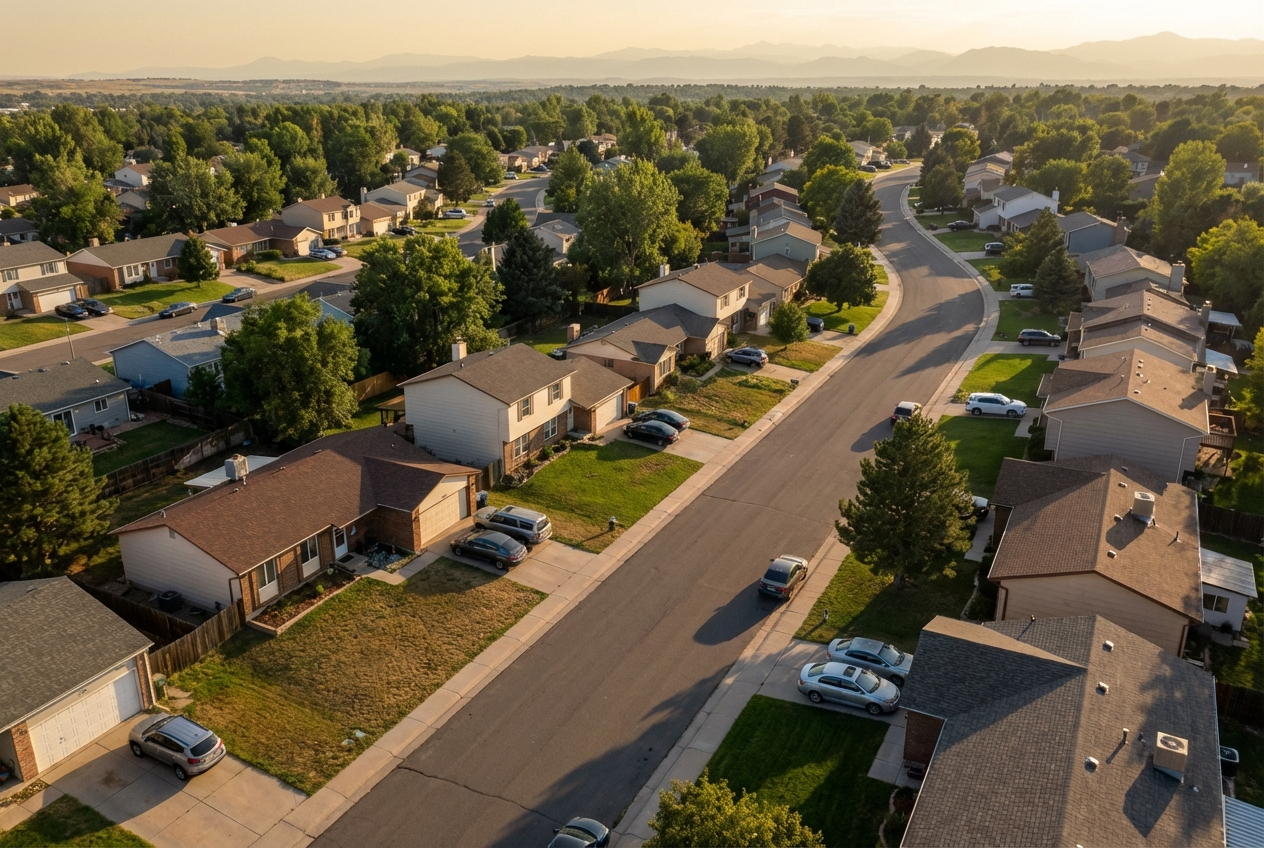
The rental softness is most pronounced in the city core. Aurora, Centennial, Lakewood, and Arvada have been holding relatively tighter demand for two years running. These markets attract a different renter profile - working families, dual-income households, people who want space and good schools rather than walkability and rooftop bars.
Suburban demand tends to be stickier. These renters aren't chasing the newest amenity package. They're in lease cycles, they have kids in school, and they're not pivoting to a different neighborhood because a competitor unit offers free parking for three months. That stability shows up in vacancy and renewal rates.
If your property is in an inner suburb, your competitive set is more limited and demand is steadier. Price accordingly - not at a 2022 premium, but you don't need to panic-cut either.
What's Actually Driving the Softness
Three factors combined to create the current market:
Supply surge. The 20,000 apartments that came online in 2024 were planned and approved during the pandemic-era demand spike. Once those units hit the market, supply outpaced absorption. Simple.
Population migration slowing. Colorado has seen population growth decelerate meaningfully since 2020. Some analysts are forecasting negative net migration. Fewer people moving to Denver means less demand pressure at the margins.
Renter financial stress. Denver renters have absorbed about 30% higher total living costs since 2019 when you factor in rent, groceries, utilities, and transportation. That pressure shows up as tenants renewing leases (rather than paying moving costs) and other tenants doubling up or moving to less expensive submarkets. Both dynamics dampen demand for new listings.
The result is a market where landlords are competing harder for a slightly smaller pool of qualified tenants. That competition mostly shows up in pricing and days-on-market.
If you're a Denver landlord wondering why your unit is sitting longer than it used to, this is why. It's not your property. It's the market.
That said, if your unit is sitting significantly longer than the average, that's a different conversation. At Sheepdog, we track days-on-market for every unit because vacancy is the single biggest drag on ROI. Most owners don't realize a two-week vacancy gap costs more than several months of management fees. Contact us if your property isn't performing and you want an honest assessment.
The 2026 Forecast: A Modest Recovery Is Coming
The drivers that created the softness are starting to reverse. New apartment construction tapered meaningfully in 2025. Units in the pipeline are fewer. As the overbuilt supply from 2024 gets absorbed, the supply/demand balance should tighten.
Analysts are projecting 2-3% rent growth in 2026, primarily in well-located single-family homes. That's not a boom. But it's directionally positive. Apartment rents in high-supply corridors may stay flat or decline further through mid-2026 before stabilizing.
The caveat is timing. If you're waiting for the market to recover before making leasing decisions, you're leaving money on the table today. A well-priced listing that fills quickly at current market rates outperforms a overpriced listing that sits for six weeks at an aspirational rate. Do the math on your specific unit.
In Denver, listing a property in February versus May can mean a 3-4 week difference in days-on-market. At $1,900/month, that's roughly $1,400 in lost rent. The calendar matters. Price matters. Both together matter a lot.
What This Means for Your Rental Strategy Right Now
Here's where most market analysis stops being useful - at the "here are the trends" stage without actually telling you what to do.
Update your pricing benchmarks. If you're anchoring to what your unit rented for in 2022, that number is wrong. Comparable units are renting for less. Running active comparables before listing isn't optional anymore. At Sheepdog, we pull fresh market comps within a week of any listing because stale data leads to overpriced listings that sit.
Tenant retention is your highest-ROI lever right now. A good tenant renewing at flat rent is worth more than a new tenant at a $50/month premium. Turnover costs $1,500-$2,500 minimum when you factor in cleaning, painting, vacancy, and leasing costs. In a softer market, keeping your good tenants isn't a nice-to-have. It's a financial decision.
Reduce your days-on-market target. In a market with higher vacancy, the speed of the lease-up matters more than squeezing for maximum rent. A unit that fills in 7 days at $1,850 beats one that fills in 35 days at $1,900. Every time.
Don't panic, but don't sleepwalk. The owners who struggle in a balanced market are the ones who either overcorrect (dropping rent to desperate levels) or refuse to adjust at all. The right move is calibrating to real market data and executing quickly.
If you're not sure where your property stands in the current market, a conversation costs nothing. We're happy to do a no-pressure assessment of your unit's position and give you our honest read on pricing and demand.
Frequently Asked Questions
What is the average rent in Denver in 2026?
The average rent across all property types in Denver was approximately $1,889/month heading into 2026, down roughly 2.7% year-over-year. Single-family homes are down more sharply (over $140/month) while condos and apartments have declined about $48/month on average.
Is Denver's rental market a renter's or landlord's market in 2026?
Denver's rental market in 2026 is best described as balanced, with conditions slightly favoring renters. Metro-wide vacancy of approximately 7% is the highest it's been in about 15 years, which gives renters more options and negotiating leverage than they've had since before the pandemic.
Are single-family home rentals affected the same as apartments?
No. Single-family homes are experiencing less severe softness than multi-family apartments. The oversupply that's driving vacancy is concentrated in apartment product, particularly newer units in urban corridors. SFH inventory is structurally limited, which provides a natural floor on vacancy.
Which Denver suburbs have the strongest rental demand in 2026?
Aurora, Centennial, Lakewood, and Arvada have maintained steadier demand than the city core. These markets attract family-oriented tenants with longer lease cycles and lower turnover propensity, which supports more stable vacancy and renewal rates.
Will Denver rents go back up in 2026?
Most analysts project modest 2-3% rent growth for 2026, particularly in well-located single-family homes. New apartment construction has slowed significantly, which means supply will tighten as existing inventory absorbs. Full recovery in high-supply corridors may take longer.
How long should I expect my Denver rental to sit vacant right now?
It depends heavily on property type and location, but expect longer lease-up times than 2021-2023. A well-priced SFH in a good suburban location might move in 10-14 days. An apartment in a high-supply corridor may take 3-5 weeks if priced at current market. Pricing accuracy is the primary variable.
Should I lower my rent or offer concessions?
In most cases, pricing accurately from the start is better than listing high and offering concessions later. Concessions like a free month are often less visible in search results, so they don't generate the same inquiry volume as a lower listed rent. Know your market before deciding.
How does the current market affect my decision to sell vs. hold?
Selling in a soft market can mean accepting lower values on both the property and the income multiple. If you have a good tenant in place and reasonable cash flow, holding through a recovery period (likely mid-to-late 2026 and beyond) is often the better financial decision. Individual circumstances vary.
The Denver rental market is correcting, not collapsing. The owners who do well through this period are the ones who update their assumptions, price accurately, and put real effort into keeping good tenants. The owners who struggle are the ones anchoring to a market that no longer exists.
If you want a straight answer on where your property stands - reach out. That's what we're here for.