
South Broadway has one of Denver's most appealing tenant profiles on paper: young, employed, active, renting by choice in a neighborhood they specifically chose. It also has some of the trickiest landlord complications in the city - especially if your property sits in a mixed-use building or an industrial conversion.
If you own residential property in the Baker neighborhood and SoBo corridor, here's what the market actually looks like in 2026.
The Neighborhood: Industrial Past, Eclectic Present
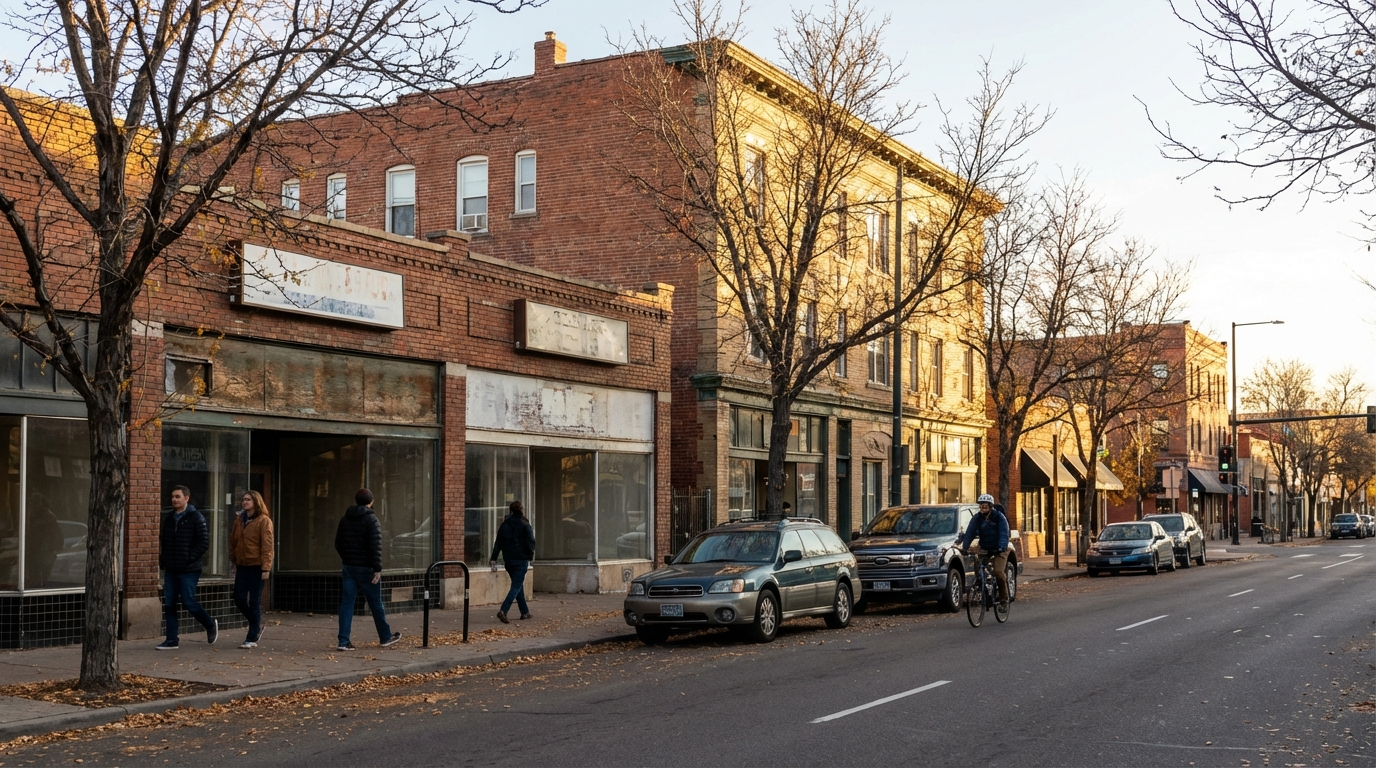
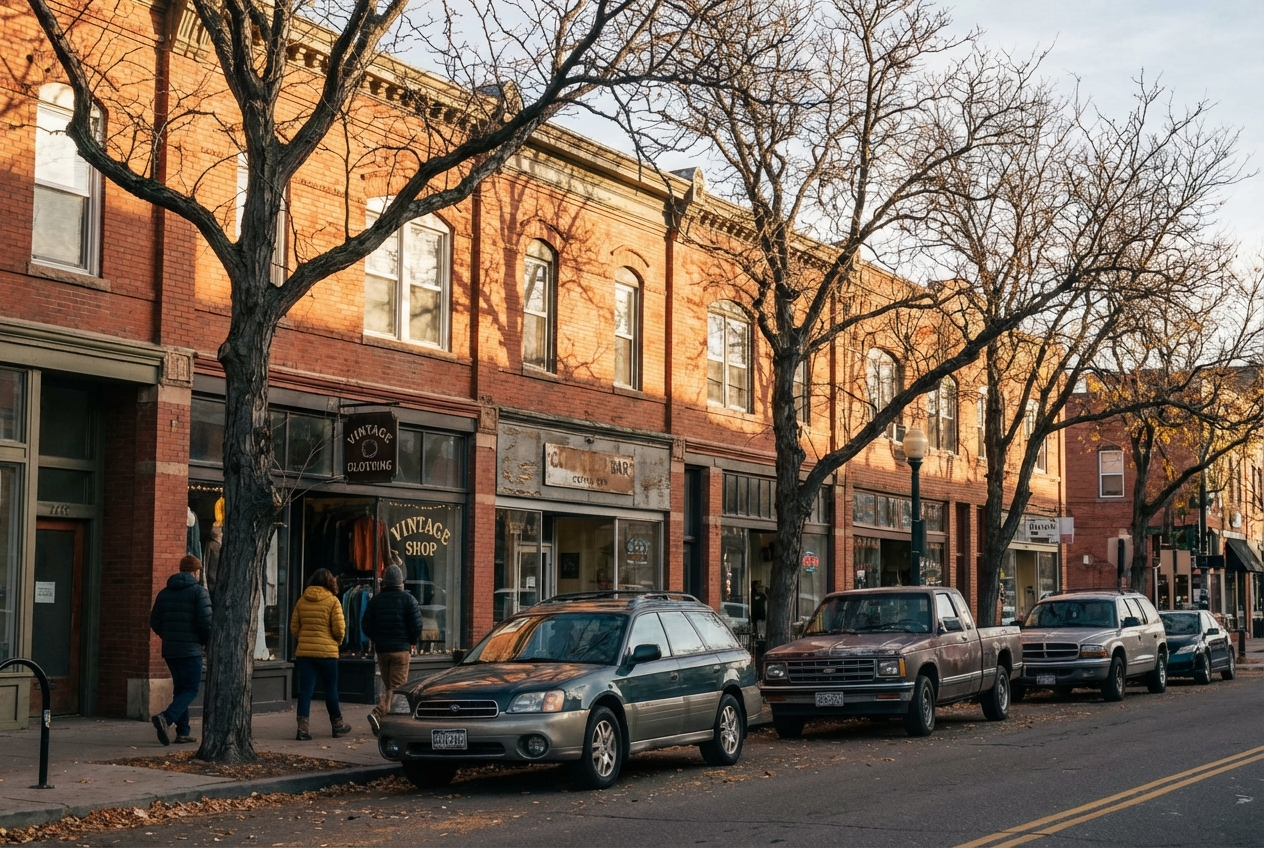
South Broadway runs from south of 6th Avenue to north of I-25, through the Baker neighborhood. Once a transit corridor anchored by auto dealers and light industrial uses, it became Denver's most authentically weird commercial strip over the last two decades. Vintage clothing stores, music venues, art galleries, craft bars, and restaurant staples like Denver Biscuit Co. and Adrift Tiki Bar now define the street identity (City Cast Denver, 2025).
The residential stock mirrors that history. You'll find original 1880s-era commercial buildings with converted upper-floor apartments, 1960s apartment complexes, and newer mixed-use developments that put retail or restaurant space on the ground floor and rental units above. Former hotel buildings have been converted to mixed-income housing. The building at 101 South Broadway, once a hotel from the early 1900s, was redeveloped to include retail and affordable housing units (ApartmentList).
The neighborhood sits between Broadway and I-25 to the east, extending west through Baker's residential blocks. It's well-connected to downtown via light rail (Broadway Station, I-25/Broadway Station) and sits on a direct bus corridor. Tenants who work downtown or in the Tech Center find the location works from both ends.
Rental Market: SoBo Rents in 2026
Baker/South Broadway is not a cheap market, despite what the funky aesthetic might suggest. Average rent in the Baker neighborhood reached $1,955/month in late 2025 (RentCafe). One-bedroom apartments near the South Broadway corridor average $2,093/month (Rent.com). Two-bedroom units in decent condition run $2,300-$2,700 depending on building age and finish level.
For comparison, Denver's citywide average rent sits at $1,889/month (RentCafe 2025). South Broadway/Baker runs slightly above that baseline. The premium is lifestyle-driven - proximity to the entertainment corridor, the light rail connection, and the neighborhood identity all factor into what tenants will pay.
Demand runs strong through March to August. Summer showings are active. Fall stays busy because this neighborhood draws renters who are actively relocating to it, not just moving to any available unit. January and February slow down but don't stop - a well-priced unit in Baker doesn't sit for long even in winter.
Who Rents on South Broadway
The SoBo tenant profile is distinctive. These are primarily renters in their mid-20s to mid-30s who chose this neighborhood intentionally. They work in:
- Creative industries: graphic design, music, photography, media
- Hospitality and service: bartenders, restaurant managers, baristas who work in the neighborhood and want to walk to work
- Tech and knowledge work: remote workers and startup employees who want the lifestyle but don't need to be near an office
What makes this tenant pool appealing is their genuine attachment to the neighborhood. They want to be here. That translates to stable tenancies when the property delivers.
What requires attention is income screening. Many South Broadway tenants have variable income - tip-based workers, freelancers, gig workers with legitimate earnings but irregular pay stubs. A single pay stub showing a good month is not a reliable screening standard here. Look at 3-6 months of bank statements alongside the employment verification. Stability signals matter more than peak income figures.
Tenants expect: updated unit interiors, reliable HVAC (more on this in a moment), proximity to everything they chose the neighborhood for, and a landlord who doesn't treat a late-night noise complaint from neighbors as a tenant performance issue.
Get Sheepdog's take on your South Broadway property - we know this market and we know how to screen for it.
Landlord Gotchas Specific to South Broadway
Mixed-use buildings create noise and liability conflicts that standard residential leases don't address.
If your residential unit sits above a bar, restaurant, or retail space - even in the same building you own - you're not managing a purely residential rental. You're managing a residential unit in a commercial environment.
Denver's mixed-use zoning (MX-2 and MX-3 categories) allows commercial and residential uses in the same structure. That zoning doesn't resolve the noise and habitability questions. A tenant in a second-floor apartment above a bar that serves until 2 AM on weekends will experience disruption. If that tenant files a noise complaint through Denver's 311 system, or claims the noise makes the unit uninhabitable, you're in a complicated position - especially under Colorado's enhanced warranty of habitability law (SB24-094), which creates real legal exposure when residential conditions are below standard.
Before renting any unit in a mixed-use building, document the commercial activity on other floors in your lease and move-in paperwork. Use a lease clause that accurately describes the building's mixed-use nature and sets expectations. Tenants who are told upfront that the neighborhood is lively and the building is mixed-use adapt accordingly. Tenants who discover it on their first Friday night become problems.
Industrial conversion buildings struggle to meet Colorado's heating requirements.
South Broadway has significant stock of converted industrial and commercial buildings now used as residential rental units. Exposed brick, concrete floors, high ceilings, large original windows. These spaces have genuine aesthetic appeal. They also heat inefficiently.
Colorado's enhanced warranty of habitability (SB24-094) requires landlords to maintain interior temperatures of at least 68 degrees Fahrenheit during occupied periods. Industrial conversion spaces with single-pane warehouse windows, minimal wall insulation, and high ceilings may struggle to hit that standard during Denver's serious cold stretches - when overnight lows drop to single digits in January and February.
If you own a converted loft-style unit, get a professional HVAC assessment before your first tenant occupancy. Understand what the heating system can realistically deliver. If there's a gap between the system's capacity and the legal minimum, close it before a tenant calls at midnight in February and you have both a habitability complaint and a repair emergency at the same time.
What Sheepdog Does Here
South Broadway is a neighborhood where lease documentation needs to be airtight. Mixed-use building conditions, income variability in the tenant pool, and the habitability exposure in older buildings all require a management approach that goes beyond standard processes.
At Sheepdog, we use leases built and maintained by Denver's largest landlord attorney. Those leases cover the scenarios generic online lease templates don't anticipate - including mixed-use building disclosures and habitability documentation. Learn more about how we approach Denver property management or reach out directly.
FAQ
What does a 1-bedroom in South Broadway typically rent for in 2026?
One-bedroom units near the Broadway corridor average around $2,093/month (Rent.com). Updated units in newer buildings or with private outdoor space hit the top of the range. Older stock with less updated finishes comes in lower.
What tenant screening approach works best for South Broadway renters?
Standard income-to-rent ratios based on gross pay don't capture the full picture for tip workers and freelancers. Ask for 3-6 months of bank statements to verify consistent cash flow rather than relying solely on employer verification or a single pay stub. Stable rental history is a strong signal in this tenant pool.
Are there noise issues to expect in South Broadway rentals?
Yes, if your unit is near the bar and entertainment strip. South Broadway has nightlife that runs late on weekends. Units within half a block of the main strip will experience this. Units in the residential interior of Baker are significantly quieter. Know what you own and describe it accurately to prospective tenants.
What's the average lease length in South Broadway?
South Broadway tenants average 10-14 month tenancies, shorter than family-oriented neighborhoods like University Hills or Platt Park. Build your vacancy budget for annual turnover rather than assuming multi-year retention - though it does happen with good landlord-tenant relationships.
Is my mixed-use building covered under standard landlord insurance?
Not necessarily. Mixed-use properties often require a different insurance product than standard residential landlord policies. Confirm your coverage with your insurance provider before listing a unit in a mixed-use building. This is one of those details that seems minor until you need to file a claim.
South Broadway rewards landlords who understand it. The tenant demand is real, the rents are solid, and the neighborhood isn't going anywhere. But the mixed-use dynamics and building age require management that knows what it's doing. Contact Sheepdog here.