
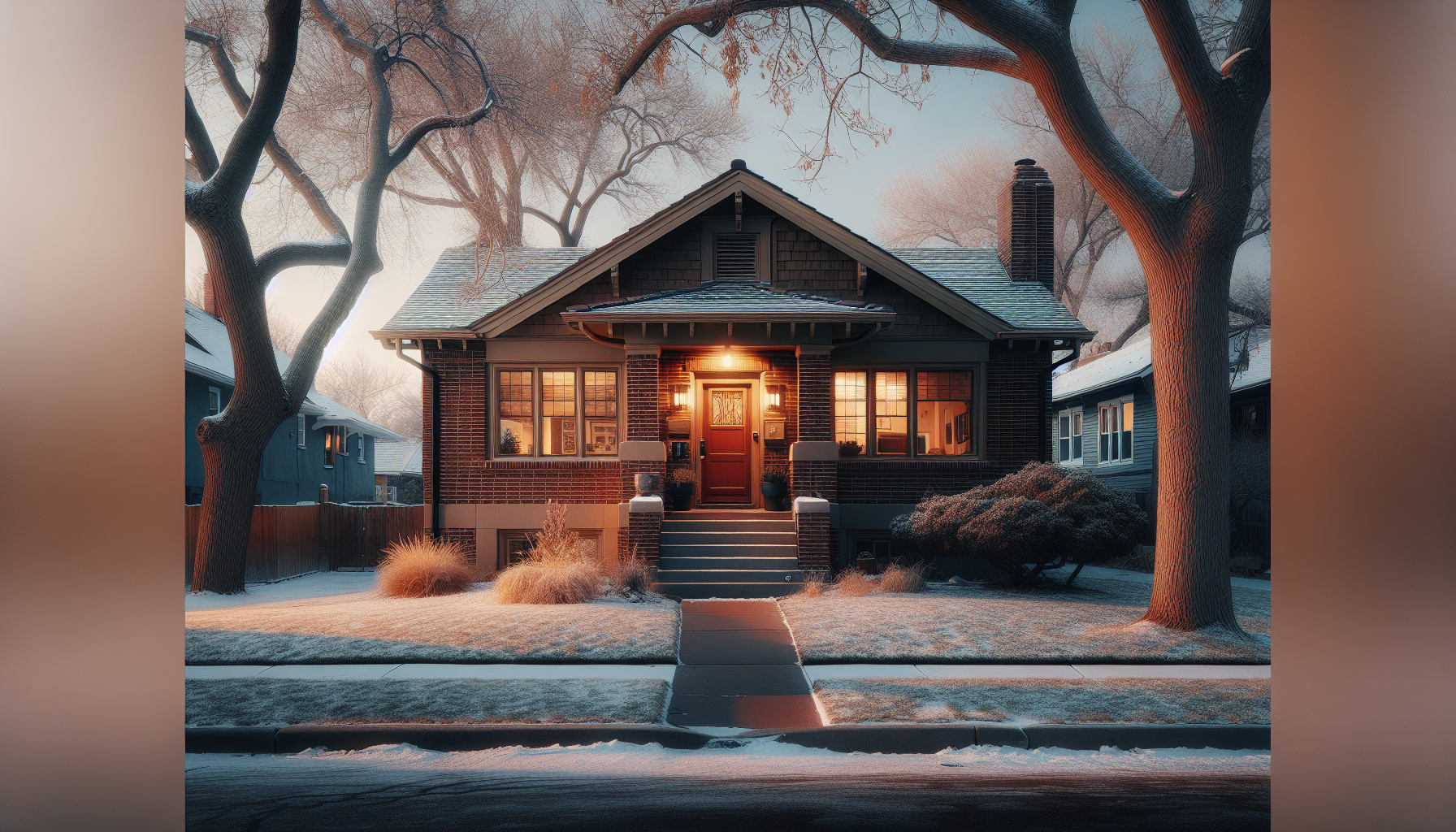
The 72-Hour Window: What Out-of-State Landlords Must Know About Denver Maintenance Emergencies
Your tenant texts you at 1:47 AM. Burst pipe. Water in the basement. You're in San Diego.
You have 72 hours.
Not 72 hours until the damage gets worse, though it will. Not 72 hours until your tenant loses patience, though that's coming too. Seventy-two hours until Colorado law considers you in breach of the warranty of habitability, and your tenant can start withholding rent, breaking the lease, or suing you for damages.
Most out-of-state landlords with Denver rentals have no idea that clock exists. They find out the hard way.
The Call Comes. You're Not Here. The Clock Is Already Running.
Being an out-of-state landlord in Denver isn't unusual. Plenty of people own a rental in Capitol Hill or Park Hill while living in Phoenix, Chicago, or Seattle. The property pencils out. You have a tenant. Things are going fine.
Until they're not.
The gap between "things are fine" and "things are catastrophic" in a Denver rental is usually measured in hours, not weeks. A burst pipe in January, a sewer backup on a Tuesday afternoon, a furnace that stops working when it's 12 degrees outside. These don't wait for business hours. They don't care what time zone you're in.
The question isn't whether a maintenance emergency will happen to your Denver rental. The question is whether you have anything in place to handle it when it does.
What Colorado Law Actually Says (And When It Started Applying to You)
Colorado updated its warranty of habitability law in 2024. The changes took effect May 3, 2024, and they apply to every residential lease in the state, including yours.
The update tightened the requirements on landlords significantly.
The 72-Hour Remedial Action Requirement
Under Colorado Revised Statutes Section 38-12-503, once a landlord receives notice from a tenant of an uninhabitable condition, the landlord must begin "remedial action" within 72 hours. Not complete the repair. Begin it.
"Remedial action" means making a timely, good-faith effort to fix the problem. If you haven't contacted a vendor, scheduled a visit, or taken any documented step toward resolution within 72 hours of notice, you're legally exposed.
The consequences aren't theoretical. A tenant can:
- Withhold rent until the condition is remedied
- Terminate the lease without penalty
- Sue for damages, including attorney fees
- Seek triple damages in some circumstances
Triple damages on a security deposit dispute is something most out-of-state owners discover the hard way. Colorado's security deposit law is separate but equally unforgiving: return it within 60 days with an itemized statement, or you owe the tenant three times the amount wrongfully withheld.
What "Written Notice" Means in 2025 (Hint: A Text Counts)
Here's where out-of-state landlords get tripped up. They assume the 72-hour window starts when they receive a formal letter. It doesn't.
Written notice under Colorado law includes text messages. It includes emails. It includes messages through a tenant portal. If your tenant sent a text about the furnace at 11 PM on a Friday, your 72-hour clock started at 11 PM on Friday, not Monday morning when you checked your phone.
You might not have even opened the message yet. The clock doesn't care.
If you're not sure your current setup can handle Colorado's 72-hour window, it's worth a conversation. Talk to Sheepdog.
The Two Ways Out-of-State Landlords Fail During Emergencies
There are two types of out-of-state landlords who get hurt by Denver maintenance emergencies. The first group is predictable. The second is where people get surprised.
Failure Mode 1: No Local Infrastructure at All
These are landlords who bought a Denver property, found a tenant, and are essentially self-managing from afar. They have one HVAC company they've used before and a general contractor who does "whatever comes up."
When something breaks at 1 AM on a Sunday in January, they start Googling. They call whoever answers. They get whoever has availability, which is not the same as whoever does good work. They pay emergency rates without knowing whether they're getting ripped off. And they pray the problem gets fixed before they have to fly in.
This setup fails not because these owners are irresponsible. It fails because local vendor relationships take years to build, and they don't exist if you're 1,500 miles away running a rental as a side investment.
Failure Mode 2: Infrastructure That Doesn't Work Under Pressure
This is the one that catches people off guard. These landlords have a property manager. They feel covered. Then an emergency happens and the PM calls them for approval on a $600 plumbing repair. Then calls again for authorization to use an after-hours vendor. Then waits for a callback that doesn't come until morning.
Twelve hours later, what was a burst supply line is now a flooded sub-floor with potential mold starting to grow. The remediation bill went from $800 to $9,500.
A property manager who calls you for every emergency decision isn't providing management. They're providing a phone number with a middleman attached.
What Denver's Physical Environment Does to Your Rental
Denver looks like a flat city on a map. It doesn't behave like one.
Sitting at 5,280 feet with the Rockies to the west, Denver gets temperature swings that routinely hit 40-50 degrees in a single day. A March afternoon can be 65 degrees. A March night can be 18. That kind of thermal cycling is hard on building materials, and it's especially hard on aging housing stock.
Park Hill and Capitol Hill properties from the 1940s and '50s have predictable supply line failures every January. The pipes aren't bad. They're just old, uninsulated, and on borrowed time. If you own a property in either neighborhood, a preventive inspection before winter isn't optional. It's the difference between a $200 service call in October and a $6,000 emergency in January.
Denver's UV index is also significantly higher than most coastal markets, which accelerates roof membrane degradation. A roof that looks fine from the ground can be holding water by the time a Colorado spring hailstorm hits. Out-of-state owners don't see this because they're not here, and they don't find out until a tenant reports water coming through the ceiling.
The other thing Denver does that people don't expect: the shoulder seasons are harder on exterior plumbing than deep winter. Denver's temperature swings in October and March are harder on exterior spigots and hose bibs than January is. Most owners winterize for January and forget the shoulder seasons entirely.
The Home Warranty Trap
A lot of out-of-state investors put a home warranty on their Denver rental thinking it solves the emergency problem. It doesn't. It creates a different one.
Home warranties require the owner to file a claim, wait for a dispatch (typically 3 to 5 business days, sometimes longer), accept whatever vendor they assign regardless of quality or availability, and wait for approval before any repair begins.
A home warranty averages 5 to 10 business days from claim to dispatch. Colorado's habitability law gives you 72 hours. Do the math.
At Sheepdog, we won't manage a property that has a home warranty. Not because we're inflexible, but because home warranties make it legally impossible to meet Colorado's habitability response requirements. We've seen owners face tenant lawsuits and lease terminations because the warranty company's 7-day timeline didn't align with the state's 72-hour window.
The warranty feels like protection. In Colorado, with an out-of-state landlord, it's a liability.
What a Real Emergency Protocol Actually Looks Like
Here's what competent emergency coverage actually requires. Not "a list of vendors." A real, functional system.
Pre-authorized vendor relationships. This means vendors who know your property, have been vetted for quality and reliability, and have an agreement in place before an emergency happens. When 1 AM comes, nobody's making decisions about who to call. That decision was already made months ago.
Defined triage authority. A PM who has to call you for every repair over $200 is not equipped to handle a true emergency. Effective management requires a pre-set authorization threshold, typically $500 to $1,000, where the manager has authority to act without waiting for owner approval. At Sheepdog, we handle emergency repairs under our authorization threshold immediately, then call with a status update and a plan, not a question.
A documentation chain that protects you legally. Every maintenance emergency should generate a timestamp on the tenant's notice, a timestamp on the first vendor contact, a timestamp on the vendor's arrival, and a written record of what was done. If you ever face a habitability claim, this documentation is the difference between a case you win and one you settle.
Owner communication only when a decision is actually needed. Getting a 2 AM text about every dripping faucet isn't management. Good PM means the owner hears about emergencies once they're resolved or when a decision genuinely requires owner input, not as a live play-by-play of something you can't affect from out of state.
If that description doesn't match how your property is currently managed, that gap is costing you. Let's talk.
The Questions to Ask Any PM Company Before You Trust Them With an Emergency
Before you sign a management agreement, these are the questions worth asking directly:
- What is your emergency authorization threshold? If the answer is "$0" or "we always call the owner," that's not a compliment. It's a warning.
- Do you have vendor relationships for after-hours plumbing, HVAC, and electrical? Ask for specifics. "We have contacts" is not an answer. Named vendors with on-call availability is.
- How do you document emergency response for warranty of habitability compliance? If they look at you blankly, they're not thinking about your legal exposure.
- Have you ever managed a habitability claim under Colorado's 2024 updated law? Experience with the updated statute matters. The new timelines and documentation requirements caught a lot of PM companies off guard.
- How do you handle home warranties? The answer should be that they don't.
Frequently Asked Questions
What counts as a maintenance emergency in a Denver rental?
Maintenance emergencies are conditions that affect habitability or pose an immediate safety risk. In Denver, this includes burst pipes, flooding, heat failure during winter, gas leaks, electrical hazards, sewer backups, and loss of running water. Colorado's warranty of habitability law identifies specific conditions that constitute uninhabitable conditions, and these require remedial action within 72 hours of tenant notice.
How quickly does a Denver landlord have to respond to a maintenance emergency?
Under Colorado's 2024 warranty of habitability update, landlords must begin remedial action within 72 hours of receiving written notice from a tenant of an uninhabitable condition. "Written notice" includes text messages and emails, not just formal letters. Failing to start remedial action within this window gives the tenant the right to withhold rent, terminate the lease, and seek damages.
What happens if I miss Colorado's 72-hour remedial action window?
Missing the 72-hour window exposes you to significant legal risk. Tenants can withhold rent, break the lease without penalty, and sue for damages including attorney fees. In some circumstances involving security deposit disputes, landlords can owe triple the withheld amount. Documentation of when you received notice and when you began remedial action is your primary defense.
Can I manage a Denver rental from out of state without a property manager?
Technically, yes. Practically, it's very difficult to do well. Colorado's 72-hour remedial action requirement demands an immediate local response capability that most out-of-state owners don't have. You need pre-existing vendor relationships, a system for receiving and documenting tenant notices around the clock, and the ability to dispatch help without physically being there. Many out-of-state owners find that self-management works fine until the first real emergency, and then it doesn't.
What is a home warranty and why is it a problem for Denver rentals?
A home warranty is a service contract that covers repairs and replacements of home systems and appliances. The problem is that most home warranties have dispatch timelines of 5 to 10 business days, which conflicts directly with Colorado's 72-hour remedial action requirement. An out-of-state landlord who relies on a home warranty to handle emergencies is likely to find themselves out of compliance with state law before the warranty company has even dispatched a technician.
How do I know if my property manager has a real emergency protocol?
Ask about their vendor relationships by name. Ask what their emergency authorization threshold is and whether they can act without owner approval. Ask how they document emergency response for habitability compliance. Ask about their process for after-hours calls specifically. A PM company with a real emergency protocol will answer these questions specifically and confidently. One without a real protocol will speak in generalities.
What Denver neighborhoods have the highest maintenance emergency risk?
Based on plumbing age and housing stock, Park Hill and Capitol Hill carry higher frozen pipe risk due to 1940s-1950s construction with poorly insulated supply lines. Highlands properties also have significant exposure. Denver's entire older housing stock, generally anything built before 1970, has more predictable winter failure patterns than newer construction in Stapleton or Cherry Creek.
Does a tenant text message count as written notice under Colorado law?
Yes. Under Colorado's updated warranty of habitability provisions, written notice includes text messages, emails, and messages through tenant portals. The 72-hour remedial action clock starts when the landlord receives the message, regardless of whether they've read it. Out-of-state owners who aren't monitoring their communication channels around the clock can find themselves already behind the statutory timeline before they're even aware of an issue.
Managing a Denver rental from out of state doesn't have to feel like white-knuckling every winter. But it does require having the right infrastructure in place before something goes wrong. If you don't, you're not managing a rental property. You're managing a slow-motion liability.