
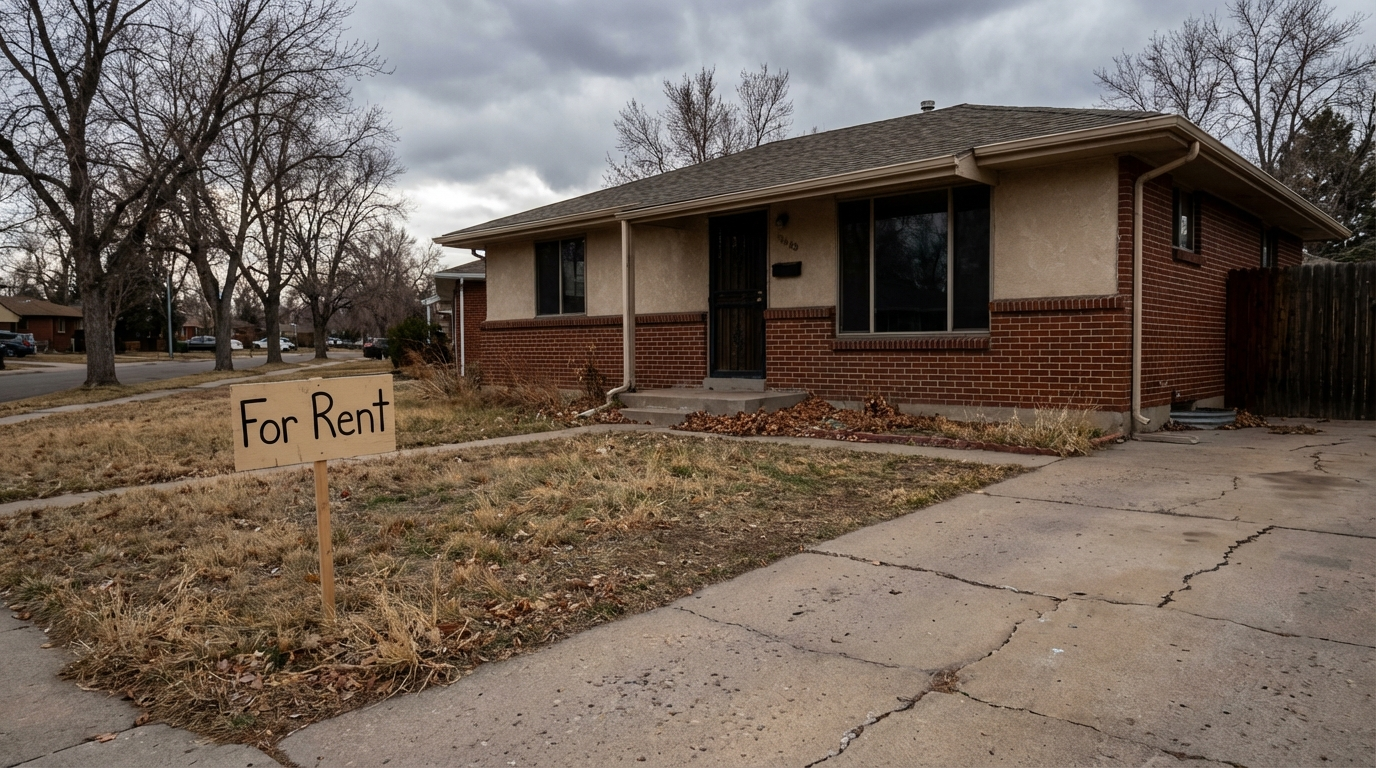
You're losing roughly $80 a day. The clock started the moment your last tenant handed back the keys.
Most owners know this. The math isn't complicated. But when the unit has been empty for five weeks and the showings have dried up, it starts to feel like the only lever available is dropping the price again. Sometimes that's right. Often, it isn't.
If your Denver rental property has been vacant too long, there are four specific causes. Knowing which one applies to your situation changes everything about what you do next.
What "Normal" Looks Like in Denver
A vacancy between tenants in Denver typically runs 36-53 days when a property manager handles the full transition. That window includes the notice period overlap, make-ready, active leasing time, and the pre-move-in gap.
Self-managed properties tend to run longer. Not because the owners aren't trying, but because a professional leasing process has a lot of small handoffs that require coordination, and every delay compounds. Expect 60-90 days for self-managed transitions unless you're unusually well-organized and lucky with timing.
Denver's metro vacancy rate has been hovering around 7% as of late 2025. That means real competition for quality tenants, but it also means a well-priced, well-presented unit still rents. The market hasn't become unworkable. It's just less forgiving than it was in 2021.
Denver's rental market has micro-seasons. A unit listed in late February or March moves in 10-14 days. That same unit listed in November can sit for 45 days and generate $200 less per month. If your vacancy is running long and you listed during a slow window, part of the problem is timing, not just price or condition. Listing in October is playing on hard mode.
If you've been vacant for more than 21 days and don't know exactly why, that's the first problem to solve.
[Wondering what your unit should be renting for right now? We run market analyses for Denver owners at no cost. Contact Sheepdog at https://www.sheepdogpm.com/contact]
The Four Reasons Denver Rentals Sit Vacant Too Long
These are in order of how often they show up. If your unit is sitting, it's almost certainly a combination of at least two.
1. The Price Is Wrong (And You're Probably Not Measuring It Right)
This is the cause about 70% of the time. The owner priced based on what they need from a cash flow perspective, what a neighbor told them, or what Zillow's rental estimate showed. That estimate is often stale, almost always optimistic, and completely blind to your specific unit's condition and your neighborhood's current demand.
Here's a diagnostic tool that actually works: look at the ratio of inquiries to showings.
We track showing-to-application conversion on every unit. If we're getting showings but no applications, price probably isn't the problem. If we're not getting inquiries at all, the price is almost certainly wrong.
The math on stubborn pricing almost never works in the landlord's favor. A unit priced at $2,500 that sits for 45 days loses $3,750 in rent. Dropping to $2,350 and renting in 10 days costs you $150/month in rent but saves you $3,167 in vacancy over a 12-month lease. Run the numbers before you decide to hold the line.
2. The Listing Isn't Converting Inquiries to Showings
Bad photos are the second-most-common cause. Tenants decide within about four seconds whether they're going to inquire based on the first listing photo. Dark iPhone photos taken at bad angles send people scrolling to the next unit.
Professional photos cost $150-300. They typically cut days-on-market by 40-50%. That is the highest-ROI thing most self-managing landlords aren't doing. And it's not because the owners don't care - it's because nobody told them the number.
The listing description matters too, mostly for search filter accuracy. Make sure your amenities are listed completely so the unit shows up in the right filtered searches. Tenants filter for garage, pets allowed, washer/dryer in-unit, fenced yard. If those features exist and aren't listed, you're invisible to the people who want them.
3. The Make-Ready Took Too Long
Most vacancy creep happens during make-ready, not during active leasing. A tenant gives notice on March 15, the lease ends April 30, and the landlord doesn't start contractor outreach until May 2. Paint and carpet get scheduled for May 12. Work finishes May 19. The unit lists May 20.
Three weeks of avoidable vacancy, right there.
The fix is simple but requires planning: start scheduling contractors the day you receive notice. Most good vendors in Denver are booking 2-3 weeks out. If you wait until move-out day to start making calls, you've already lost the race.
Start marketing with "available mid-May" language before the unit is empty. Quality tenants plan 30-45 days ahead. Getting in front of them during that window wins the best applicants before they commit to something else.
4. Screening Is Creating a Bottleneck
This is the most surprising cause, and the one most owners don't consider. If your screening criteria are too strict, or not compliant with Colorado law, you're narrowing your own applicant pool and extending your vacancy without understanding why.
Colorado limits income requirements to 2x the monthly rent for all applicants. Landlords who require 3x income are violating state law and eliminating qualified applicants. That's not a hypothetical edge case. It's common.
Colorado also prohibits using credit scores to screen subsidized housing voucher applicants. If your criteria don't reflect current Colorado law, you may be turning away legally protected applicants, which creates both a vacancy problem and a legal exposure.
Slow screening is also a vacancy killer. Most quality tenants are applying to three or four units simultaneously. If your review process takes five business days, you'll lose strong applicants to a landlord who responds in 48 hours.
The Hidden Costs Beyond Lost Rent
Lost rent is the obvious number. It's not the whole number.
A vacant Denver rental still has utility costs. Landlords typically cover gas and electric during vacancy, which runs $100-180/month depending on the season. Water and sewer for a detached house adds another $50-80.
Vacant properties carry higher insurance risk. Most landlord insurance policies include a clause that modifies or eliminates coverage after 30-60 consecutive days of vacancy. If your unit has been empty for six weeks and a pipe bursts, you may discover you're only partially covered. Read your policy and call your insurer if you're unsure.
Then there's market stigma. A unit that's been listed on Zillow for 45 days starts accumulating "what's wrong with it?" energy from prospective tenants. Inquiry volume drops not because of price or photos, but because the listing age itself has become a red flag. At 60 days on-market, you're fighting perception as much as competition.
The full carrying cost of a 60-day vacancy on a $2,400/month Denver rental, accounting for lost rent, utilities, and insurance risk: roughly $5,200. That's before any deferred maintenance that tends to accumulate in vacant properties, and before any mortgage carry costs.
What a Disciplined Leasing Process Actually Looks Like
At Sheepdog, we track days-on-market for every unit because vacancy is the single biggest drag on owner ROI. Most owners don't realize a two-week extended vacancy gap costs more than a full year of management fees.
A disciplined process has four components that most self-managing landlords either miss or do in the wrong order.
Pre-marketing starts before the unit is available. As soon as notice is received, the listing goes up as "available [date]." The best tenants plan 30-45 days out. A listing that goes live the day after move-out misses that window entirely.
Pricing is based on actuals, not asking prices. We pull rents from comparable units that are actively leasing, not Zillow estimates or listings that have been sitting for 45 days. Asking prices are aspirations. Leased rents are reality.
The make-ready is pre-scheduled. Vendors are lined up before the tenant moves out. The goal is a 5-7 day turnaround, not three weeks. This requires planning and vendor relationships, not heroics.
Screening is fast and compliant. A 24-48 hour review cycle is the standard. Good applicants wait a day or two. They don't wait a week.
[If your unit has been sitting, we'll tell you exactly what's wrong and what a realistic leasing timeline looks like. https://www.sheepdogpm.com/contact]
When to Reduce the Price (And When to Hold)
Price reductions are sometimes right. They're also the default move that owners make when the actual problem is something else entirely. Cutting price when the real issue is bad photos just means you're now showing bad photos for less money.
Reduce the price when:
- You've had zero or minimal inquiries in the first 7-10 days of active listing
- You've pulled comparable actuals (not Zillow estimates) and your price is more than 5% above them
- The unit has been vacant more than 21 days and you're heading into a slow season
Do not reduce the price when:
- You're getting showings but not applications (this is a condition or screening issue, not price)
- You're in the first 5-7 days of listing (give the market time to respond before panicking)
- You're trying to compensate for bad listing photos (fix the photos first)
The general rule: a well-priced, well-presented Denver rental should receive multiple qualified applications within 7-14 days in most months. If you're past that window without a strong application, something specific is wrong. The answer is to diagnose it, not to throw price cuts at it blindly.
Frequently Asked Questions
How long should it take to rent a property in Denver?
A well-priced, well-presented Denver rental should receive qualified applications within 7-14 days of active listing during peak season (February through August). In slower months (November through January), expect 3-4 weeks. Past 21 days without a quality application means something specific needs to be fixed.
What's the average cost of a one-month vacancy in Denver?
On a $2,400/month rental, a 30-day vacancy costs roughly $2,600-2,900 when you include lost rent, utility carry costs, and insurance risk. Extended vacancies add market stigma that compounds the problem beyond the direct dollar cost.
Should I lower my rent to fill a vacancy faster?
Only if price is actually the bottleneck. If you have no inquiries in the first 10 days, yes. If you're getting showings but no applications, price likely isn't the problem. Diagnose first.
How does seasonality affect vacancy in Denver?
Significantly. Denver's rental market runs fast February through August and slows in fall and winter. A unit listed in October or November will sit 2-3x longer than the same unit listed in March. If you have any flexibility on timing, late winter/early spring is the right window.
What should I do if my property has been vacant for 60+ days?
At 60 days, you almost certainly have a layered problem. Pull the listing, reset it with fresh photos and a new listing date, and relaunch at a price slightly below comparable actuals to generate momentum. "Slightly below" means $50-100/month. Not $300.
Does vacancy affect my landlord insurance coverage?
Most landlord insurance policies modify or reduce coverage after 30-60 consecutive days of vacancy. Check your specific policy. If your unit has been empty for more than 30 days, confirm your coverage status with your insurer before assuming you're fully protected.
What's the difference between a leasing problem and a pricing problem?
Track the ratio. No inquiries means price. Inquiries but no showings usually means listing presentation. Showings but no applications means condition, screening process, or a competing unit is priced better. Each problem has a different fix.
How do I know if my screening criteria are too strict?
If qualified applicants are applying and not being approved, review your criteria against current Colorado law. Colorado limits income requirements to 2x monthly rent. Requiring 3x violates state law. If you're applying criteria you heard about in another state, they may not be legal here.
The Bottom Line
A Denver rental that's been vacant too long has one of four problems: price, listing quality, make-ready timing, or screening process. Usually it's two or three of them stacking together.
The number that should drive every decision: roughly $80 per day in carrying cost on a $2,400/month unit. Every call about pricing, timing, and leasing speed runs through that filter.
If you're past 21 days and can't identify the specific bottleneck, get a second opinion from someone who's leased a lot of units in Denver. The problem is almost always diagnosable. It's rarely mysterious.
[We're happy to take a look at your specific situation. https://www.sheepdogpm.com/contact]