
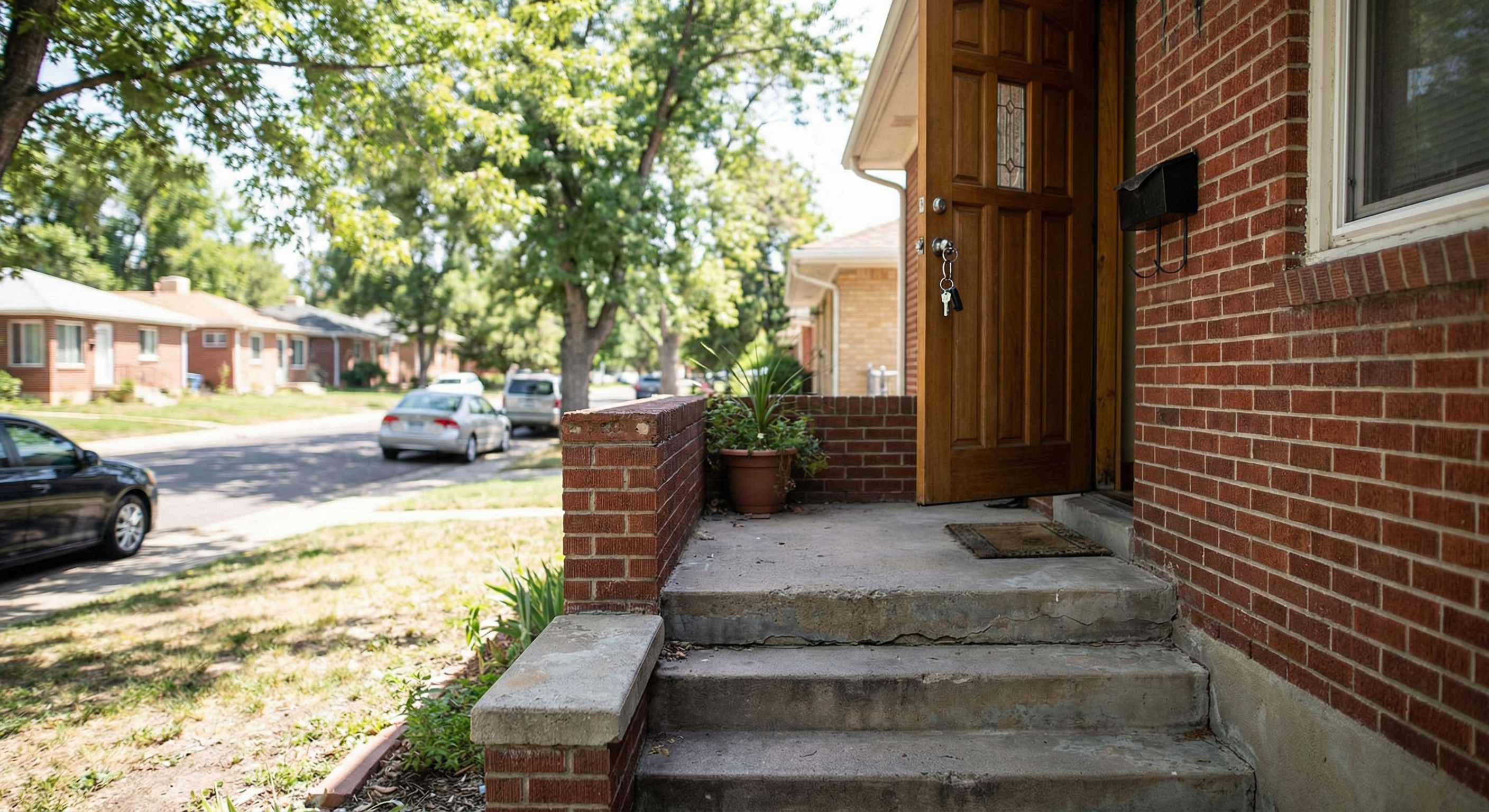
A Denver landlord charged a $250 automatic cleaning fee at move-out last spring. It was in the lease. The tenant signed it. The landlord had been doing it that way for over a decade. Under Colorado's new law, it's an illegal deduction.
That's how fast the rules changed.
HB25-1249 took effect January 1, 2026. It rewrote the security deposit statute in ways most landlords haven't fully absorbed yet. If you're still running move-outs the way you ran them in 2025, you're probably getting something wrong.
Here's what actually changed and what you need to do about it.
What Changed on January 1, 2026
HB25-1249 was signed by Governor Polis in June 2025 and became law on January 1. It didn't just adjust a few definitions. It expanded the list of prohibited deductions, changed the carpet and paint rules, added a mandatory pre-move-out inspection process with real penalties, tightened the documentation requirements, and shortened the return window.
Any lease clause that contradicts the new law? Void. Not just unenforceable in some circumstances. Void.
That matters if your lease template is from 2024 or earlier.
The New Definition of Normal Wear and Tear
The statute now explicitly includes uncleanliness in the definition of normal wear and tear - with one exception. The law says deterioration includes uncleanliness that occurs through ordinary use, unless it renders the unit substantially less clean than at the beginning of the lease.
That phrase "substantially less clean" is doing a lot of work. It means:
- Routine dust, minor grease near the stove, a smudgy window - normal wear and tear. Can't charge for it.
- A unit that was professionally cleaned at move-in and comes back filthy, with garbage left inside and the oven caked in buildup - potentially chargeable.
The difference between those two outcomes lives in your move-in documentation. If you don't have timestamped photos showing exactly how clean the unit was when the tenant took possession, you don't have a claim. Denver's small claims court judges are aware of this law, and "I cleaned it before they moved in" doesn't beat a tenant's phone photos.
Most self-managing landlords document move-in with a quick walkthrough and a handshake. That's not a documentation protocol. That's a guess.
What You Can No Longer Deduct
This is where the most common violations will happen.
Automatic cleaning fees are gone. If your lease has a clause that says something like "tenant agrees to pay a non-refundable cleaning fee of $X," that clause is void. You can't charge a flat cleaning fee regardless of condition. You can only charge for cleaning if the unit was left substantially dirtier than it was when the tenant moved in - and you'll need documentation to prove it.
Pre-existing damage is explicitly prohibited. You can't charge a tenant for damage that was there before they moved in. This seems obvious, but without a documented move-in inspection, you can't prove what was pre-existing and what wasn't. Courts aren't going to give you the benefit of the doubt on this.
Touch-up paint for minor scuffs and nail holes is now normal wear and tear. That's been true in practice for years, but it's now baked into the statute.
If you're making deductions for any of these, and a tenant pushes back, you're looking at treble damages.
If managing compliance under the new law feels like a second job, that's worth thinking about. At Sheepdog, we updated our lease templates and move-in inspection protocols before January 1. It took real work to get right.
Talk to us about how we handle this ->
The Carpet and Paint Rules You Need to Know
Carpet: Landlords cannot charge for carpet replacement if the carpet is 10 years or older. Period. Doesn't matter how bad it looks. If the carpet was installed in 2015 or earlier, it's past its useful life and the cost is yours.
If the carpet is less than 10 years old, you can only charge for substantial, irreparable damage - and only for the portion of the carpet that's actually damaged. If the bedroom carpet is fine and the living room has a stain, you're charging for one room's worth of flooring, not a full replacement.
Here's the thing most landlords haven't thought through: a lot of Denver rental properties have carpet that was installed 5 to 9 years ago. That means you're approaching the window where you can't charge regardless of condition. Do you know the installation date of the carpet in your rental?
Paint: Same logic applies. Only substantial, irreparable damage qualifies. Minor scuffs, nail holes from picture frames, normal fading - that's wear and tear. If only one wall of a room has damage, you're not replacing the entire room's paint. You're patching one wall.
The Pre-Move-Out Walkthrough You Can't Skip
This is the part of the new law that's going to catch the most landlords off guard.
A tenant can now request a pre-move-out inspection before their lease ends. If they ask for one, you have to do it. The inspection has to be conducted in person or virtually, after their furniture is removed, at a mutually convenient time.
After the inspection, you provide them a written report identifying any damage beyond normal wear and tear. They then have the opportunity to address those issues before they actually leave.
Here's the part that hurts: if you refuse to conduct a requested walkthrough, you forfeit the right to withhold any deposit funds. All of it. You don't get to decide you're too busy that week.
Most landlords don't know this rule exists. Now you do. Build it into your move-out process.
Documentation and Return Timeline
Under HB25-1249, when you return the deposit (or withhold part of it), you're required to provide a written statement explaining exactly what you're withholding and why. If the tenant requests supporting documentation - receipts, photos, inspection reports - you have 14 days to provide it.
The return window is now 30 days. Your lease can extend it up to 60 days by agreement, but if your lease says "30 days" and Colorado's old standard was one month, double-check your lease language to make sure it's still valid.
Bad faith withholding triggers treble damages - three times the wrongfully withheld amount - plus attorney fees and court costs. The tenant has to send you a 7-day demand notice before they can file, but that notice is easy to send and most tenants' attorneys know it.
You don't have to be acting in bad faith to trigger this. A court deciding you had no legal basis for a deduction can find bad faith even if you genuinely believed you were right.
What to Do Right Now
If you self-manage your rental, here's your actual to-do list:
Review your current lease. Any clause that creates automatic fees (cleaning, carpet, etc.) is now void. Pull those out of your template. If you have active leases with those clauses, you can't enforce them.
Update your move-in inspection process. You need timestamped photos of every room - floors, walls, appliances, fixtures. Date them. Keep them. The "substantially less clean" standard lives or dies on this documentation.
Know your carpet age. Find out when the carpet was installed. If it's over 10 years old, remove it from your deduction calculations entirely. If it's 6 to 9 years old, start planning for what replacement will cost you out of pocket.
Build the pre-move-out walkthrough into your process. When a tenant gives notice, proactively offer the walkthrough. Don't wait for them to request it and then scramble.
Get familiar with the 30-day return window. If you need more time to get contractor estimates, your lease needs to specify an extension up to 60 days, and that extension needs to be agreed to in writing.
At Sheepdog, we've managed hundreds of move-outs across Denver. The documentation protocol we built before January 1 isn't complicated - but it does require consistency. That consistency is hard to maintain when you're also holding down a job and managing a property on the side.
See how we handle move-outs under the new law ->
Frequently Asked Questions
Can I still charge for professional carpet cleaning at move-out?
Only if the carpet is less than 10 years old and the tenant left it in substantially worse condition than at move-in. Routine carpet cleaning as a standard move-out charge is gone. You'd need to document the original condition, show the carpet's age, and demonstrate that the damage goes beyond normal use.
What happens if my existing lease has a non-refundable cleaning fee clause?
That clause is void under HB25-1249. You can't enforce it regardless of what the tenant signed. Courts treat lease provisions that contradict the statute as unenforceable as a matter of public policy. Remove those clauses from your template now.
How do I prove a unit was "substantially less clean" at move-out?
Timestamped move-in photos compared against move-out photos. The more specific, the better - appliances, inside cabinets, bathroom surfaces, baseboards. "It was clean when they moved in" without documentation isn't a legal argument.
What counts as a "bad faith" deposit withholding?
There's no bright-line definition, but courts look at whether you had a reasonable legal basis for the deduction. Charging for things that are now explicitly prohibited (automatic cleaning fees, pre-existing damage, carpet beyond its lifespan) would likely qualify. The treble damages penalty is designed to be a real deterrent.
Can I do the pre-move-out walkthrough virtually?
Yes. HB25-1249 explicitly allows virtual inspections. Both parties need to agree on the timing. The report still needs to be in writing and identify specific items of damage beyond normal wear and tear.
Does the 60-day return window require a specific lease clause?
Yes. The default is 30 days. If you need more time, your lease must specifically state a longer period, up to 60 days maximum. "As long as permitted by law" language may not be enough - be specific in your lease.
My tenant moved out in December 2025 before the law changed. Which rules apply?
The old rules apply to any tenancy that began and ended before January 1, 2026. HB25-1249 applies to leases signed or active on January 1, 2026 and beyond.
Can tenants waive the pre-move-out walkthrough?
Yes - tenants can waive their right to the inspection. If they waive it, you're not obligated to conduct one. Get that waiver in writing.
Managing security deposits correctly under the new law isn't complicated. But it requires documentation you probably don't have, lease language you probably haven't updated, and a move-out process you probably built when the old rules applied.
That's not a criticism. It's just where most self-managing Denver landlords are right now.
If you want to know how we handle this - the full workflow, what our move-in inspections look like, how we've updated our lease templates - we're happy to walk you through it.