
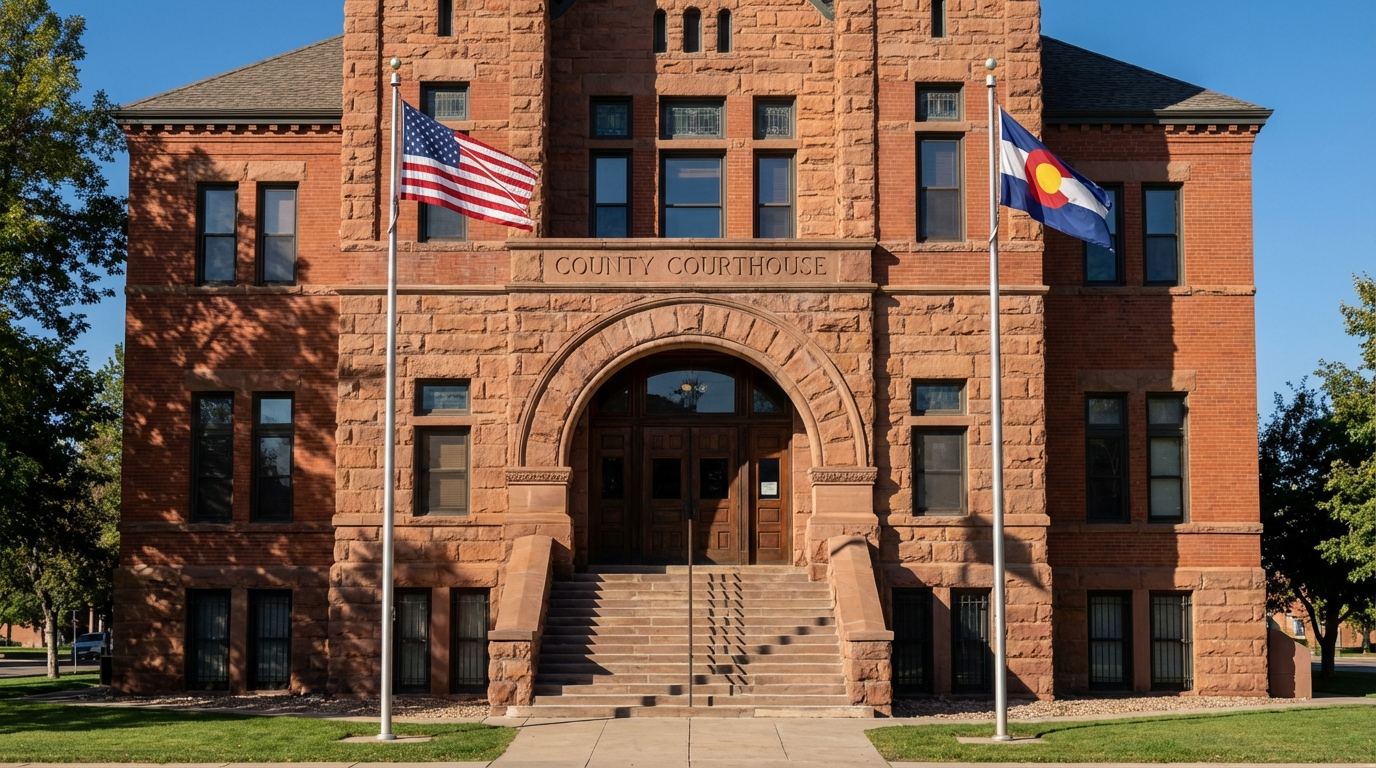
A Denver landlord changed the locks on a non-paying tenant, skipped the court process, and ended up owing the tenant $5,000 in damages.
Self-help eviction is illegal in Colorado. It doesn't matter how badly the tenant has behaved, how far behind they are on rent, or how certain you are that you're right. The only legal way to remove a tenant is through the court process - every step, in order, with correct documentation at each stage.
Colorado is not a landlord-friendly state by national standards. The rules favor tenant process rights, notice requirements are specific, and courts will dismiss eviction cases for procedural errors. If you're a Colorado landlord in 2026, here's what the process actually looks like.
This is not legal advice. For a contested eviction or a legally complex situation, work with a Colorado landlord attorney.
What Changed in 2025-2026 (Read This First)
Two significant legal changes affect evictions in 2026.
HB24-1098 (Just Cause Eviction Law): Effective 2024, Colorado requires "just cause" for evicting a residential tenant. Landlords can no longer end a month-to-month tenancy or non-renew a lease without qualifying cause. HB24-1098 means "I just want them out" is not a legal ground for eviction.
The qualifying causes include non-payment of rent, material lease violations, substantial property damage, criminal activity, and owner move-in (with proper notice and conditions). End of a fixed-term lease is still allowable, but only with proper advance notice.
HB25-1240 (Housing Voucher Tenant Protections): Effective 2025, tenants using housing subsidies (Section 8 and other vouchers) have additional eviction protections. For non-payment evictions involving voucher tenants, landlords must comply with specific federal notice requirements under the Violence Against Women Act (VAWA) in addition to standard Colorado notice requirements. This changes the notice procedure for a subset of evictions.
Both laws are active in 2026. If your tenant is on a housing voucher, the eviction process has an additional layer.
[If you're managing a problem tenant situation and aren't sure what your legal grounds are, this is a good time to talk. https://www.sheepdogpm.com/contact]
Grounds for Eviction in Colorado (Just Cause Required)
Under current Colorado law, you can evict a tenant for:
Non-payment of rent. This is the most common eviction ground. Tenant fails to pay rent in full by the due date.
Material lease violations. Unauthorized pets, unauthorized occupants, property damage exceeding normal wear and tear, operating a business in a residential unit. The violation must be material - not every minor infraction qualifies.
Substantial damage to the property. Physical damage beyond normal wear and tear, especially damage that creates habitability concerns.
Illegal activity on the premises. Drug activity, criminal operations, or activity that creates safety risks for other residents or neighbors.
Owner move-in or sale. The owner intends to move into the unit or sell to an owner-occupant. Conditions and notice requirements apply. This is not a quick exit option.
End of fixed-term lease. When a lease expires and you choose not to renew, you can decline to renew. But you need to give proper advance notice - typically 21 days for month-to-month tenancies.
What doesn't work: wanting a higher-rent tenant, not liking the tenant, wanting to renovate, or just wanting the unit back without a qualifying cause. Under HB24-1098, these are not sufficient grounds.
Step-by-Step: The Colorado Eviction Process
Step 1: Serve the Correct Written Notice
Colorado evictions begin with a written notice. The type of notice depends on the reason for eviction.
Non-payment of rent: 10-day Demand for Payment or Possession. The tenant has 10 days to pay in full or vacate.
Lease violation: 10-day Notice to Comply or Quit. The tenant has 10 days to correct the violation or vacate.
Non-renewal of month-to-month tenancy (just cause): 21-day notice before the end of the rental period.
Severe violations (criminal activity, substantial damage): 3-day Notice to Quit with no opportunity to cure.
Every notice must include a Notice of Tenant Rights. This is not optional. If the notice doesn't include the tenant rights notice, it's legally defective and the case will be dismissed. You'll start over.
Notice must be served correctly: personal service, or posted on the door with a copy mailed. Not texted. Not emailed (unless the tenant has previously agreed to electronic service in writing).
Step 2: Wait Out the Notice Period
The notice period runs from the day after service. Don't file in court until the notice period has fully expired. Filing one day early is grounds for dismissal.
Do not accept any rent payment during the notice period. This is the single most common error in DIY evictions. Accepting even a partial payment after serving a 10-day notice waives the notice entirely and restarts the process from the beginning.
Colorado courts don't reward landlords who try to cut corners. They reward landlords who followed every step correctly, documented everything, and waited for the process to work.
Step 3: File an Unlawful Detainer in County Court
If the tenant hasn't complied by the end of the notice period, file an Unlawful Detainer action in the county court where the property is located. In Denver: Denver County Court.
You'll need:
- The eviction complaint (Summons and Complaint for Unlawful Detainer)
- Proof of service of the original notice
- Copy of the lease
- Documentation of the violation or non-payment
The filing fee varies by county but typically runs $90-150.
Once filed, the court will schedule a hearing date and issue a summons. The tenant must be served with the summons and complaint. Proper service is another procedural requirement where errors can cause delays.
Step 4: Attend the Court Hearing
In Denver County, court dates are typically set 7-14 days after filing. In some suburban counties, expect 10-21 days.
Show up. Bring everything. The lease, the notice, proof of service, documentation of the violation or non-payment, all written communication with the tenant. If the tenant doesn't appear, the judge typically grants a default judgment for the landlord. If the tenant does appear, both sides present their case.
If the judge rules for the landlord, you'll receive a judgment for possession.
Step 5: Get the Writ of Restitution
After winning the judgment, request a Writ of Restitution. This is the court order that authorizes the sheriff to enforce possession.
There is typically a short waiting period before the writ is issued - the tenant gets a brief opportunity to appeal. Once the writ is in hand, contact the sheriff's office to schedule enforcement.
Step 6: Sheriff Enforcement
The sheriff posts the writ at the property, giving the tenant a final notice to vacate (typically 24-48 hours). If the tenant remains after that window, the sheriff physically removes them and the landlord can take possession.
Once you have possession, you can begin the make-ready. Do not remove the tenant's personal belongings without following Colorado's property abandonment procedures. Throwing out their stuff - even after a legal eviction - can create additional legal liability.
The Real Timeline (Not the Best-Case Version)
Everyone cites the 4-6 week uncontested eviction timeline. Here's what to actually plan for.
Uncontested, tenant leaves after notice: 2-3 weeks from notice to possession. Best case.
Uncontested, tenant ignores process: 6-8 weeks. Notice period plus court scheduling plus writ plus sheriff scheduling.
Contested eviction (tenant shows up to fight it): 2-4 months. Hearings get continued, attorneys get involved, appeals get filed. In Denver's court system, contested cases can take significantly longer.
Contested with procedural errors on your end: Add another 4-8 weeks when a case gets dismissed and you have to restart from notice.
Plan for 60-90 days as your baseline expectation for a smooth eviction with no complications. Plan for 4-5 months if the tenant is motivated to fight it.
During all of this, you continue to own and maintain the property. The tenant's obligation to pay rent doesn't go away, but collection is a separate matter from possession.
The Mistakes That Kill Eviction Cases
These are the specific errors that cause case dismissals and require landlords to start over.
Wrong notice type. Using a lease violation notice for a non-payment situation, or vice versa. Each cause has a specific notice type.
Missing the tenant rights notice. Required. Every single time. Not including it makes the notice defective.
Improper service. Texting or emailing the notice when proper service is required. Posting without also mailing. Incorrect service methods are grounds for dismissal.
Filing too early. The notice period runs fully before you can file. Day 10 of a 10-day notice is the expiration, not day 9.
Accepting rent after serving notice. This single act waives the notice in Colorado. The tenant can offer $50 toward a $2,000 balance, you accept it, and the entire case is gone. Don't accept anything after a notice is served without talking to an attorney first.
Self-help eviction. Changing locks, removing belongings, cutting utilities, or in any way forcing a tenant out without a court order is illegal in Colorado. Courts take this seriously. Monetary damages are available to tenants.
Poor documentation. Showing up to court without organized records of the violation, the notice, the lease, and your communications with the tenant. Judges rule on evidence. "They were terrible tenants" is not evidence.
[If you're trying to decide whether to handle an eviction yourself or get professional help, the question is usually worth asking before you've served the notice. https://www.sheepdogpm.com/contact]
What Happens to the Security Deposit
During the eviction process, the security deposit stays in the trust account. After you regain possession, you have 30 days to either return the deposit or provide an itemized statement of deductions, with any remaining balance.
The 30-day clock runs from the day you take possession. Missing it means you can't claim deductions - and may owe the tenant triple the deposit amount under Colorado law.
"Can I keep the deposit to cover back rent?" The deposit can be applied to unpaid rent if the lease allows it and you provide a proper accounting within 30 days. The deposit doesn't erase the debt, and if the deposit doesn't cover it, the judgment from the eviction proceeding establishes the tenant's obligation for the remaining balance.
Why Documentation Is Everything
Colorado eviction cases come down to records. Before serving any notice, make sure you have:
- Signed lease with the tenant's name, unit address, and all relevant terms
- Documentation of the violation or non-payment (dated payment records, written communications)
- Any prior notices served (not every landlord's first notice is also their last)
- Photos if the issue involves property condition
The paper trail isn't bureaucratic box-checking. It's what makes your case survivable in court when a tenant shows up with their own version of events.
At Sheepdog, our lease is built and maintained by Denver's largest landlord attorney. Every notice we serve uses the correct form, includes the required tenant rights language, and is documented with proof of service. That's not because we enjoy paperwork. It's because a defective notice is a two-month delay.
Frequently Asked Questions
How long does a Colorado eviction take?
An uncontested eviction where the tenant doesn't fight takes 6-8 weeks from notice to possession. A contested eviction can take 3-5 months or longer. Plan conservatively. If procedural errors require restarting, add 4-8 weeks per restart.
Can I evict a tenant in Colorado without cause?
Under HB24-1098, landlords generally cannot evict without just cause. Qualifying causes include non-payment, material lease violations, substantial property damage, illegal activity, and end of a fixed-term lease. Simply wanting the tenant to leave is not sufficient for month-to-month tenancies.
What is the correct eviction notice for non-payment of rent in Colorado?
A 10-day Demand for Payment or Possession, served with a Notice of Tenant Rights. The tenant has 10 days to pay in full or vacate.
What happens if I accept rent after serving an eviction notice?
The notice is waived. Accepting any payment after serving a 10-day notice restarts the clock entirely. Do not accept any payment after serving a notice without legal advice first.
Can I change the locks to remove a tenant in Colorado?
No. Self-help eviction is illegal in Colorado. Changing locks, removing belongings, or cutting utilities before obtaining a court order and sheriff enforcement can result in monetary damages against the landlord.
What is a writ of restitution?
A court order issued after the landlord wins the eviction judgment. It authorizes the county sheriff to enforce possession by physically removing the tenant if they haven't vacated voluntarily.
Do I need a lawyer to evict a tenant in Colorado?
Not technically required for uncontested cases. For contested evictions, properties with complex situations, or any case involving potential Fair Housing implications, an attorney is strongly recommended. Colorado landlord-tenant law has enough procedural requirements that a defective case costs more in delays than an attorney's fee.
How does HB25-1240 affect evictions involving housing voucher tenants?
For non-payment evictions against housing voucher tenants, landlords must comply with federal notice requirements under the Violence Against Women Act in addition to standard Colorado notice requirements. The process has an additional procedural layer. If your tenant is on a housing subsidy, work with a professional before serving a non-payment notice.